



What Are The Industries That Use Vacuum Distillation Equipment?
Vacuum distillation is an important separation process used across various industries to achieve high-purity distillate products. By operating under reduced pressure, vacuum distillation provides benefits like lower temperatures, reduced thermal degradation, and improved separation efficiencies. Specialized vacuum distillation equipment is used to carry out this process safely and efficiently. This article provides an overview of vacuum distillation and highlights the key industries that rely on vacuum distillation equipment for critical production needs.
Distillation is a common unit operation used to separate liquid mixtures based on differences in their boiling points. It involves heating the liquid feed mixture and condensing the generated vapors in order to collect purified distillate products. Vacuum distillation enhances this process by operating under reduced pressure. Lower pressures lead to lower boiling points, which provides benefits like reduced thermal degradation of heat-sensitive compounds. The use of specialized vacuum equipment enables distillation at very low pressures, making it an indispensable technique in many industries.
Vacuum distillation finds widespread use in industries like petroleum refining, chemicals, pharmaceuticals, food and beverages, and natural products processing. This article will provide an overview of vacuum distillation principles and discuss its applications across major industries that rely on vacuum distillation equipment to achieve their production and purification objectives.
Overview of Vacuum Distillation Equipment
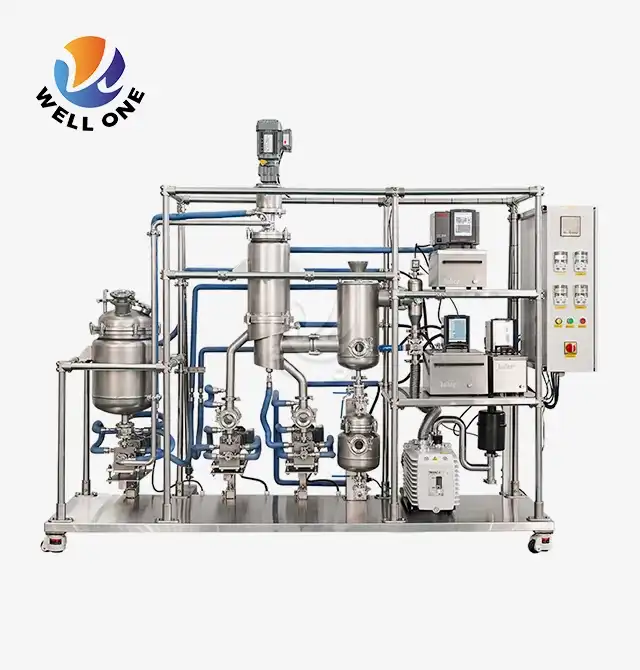
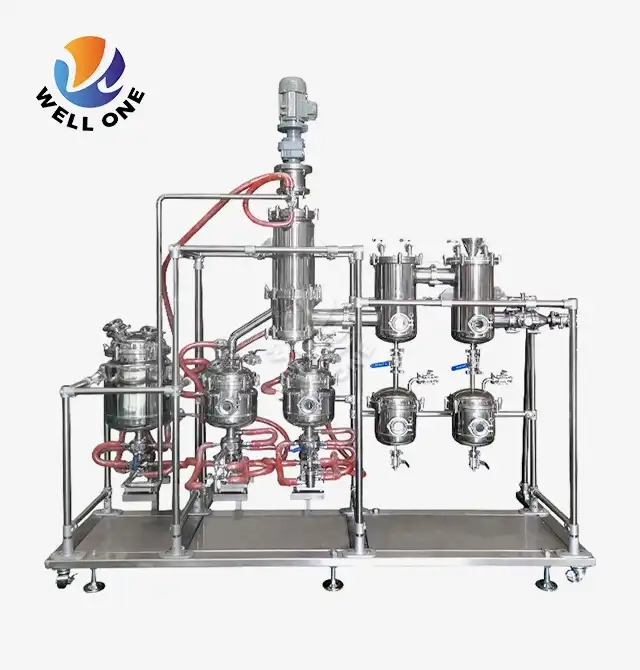
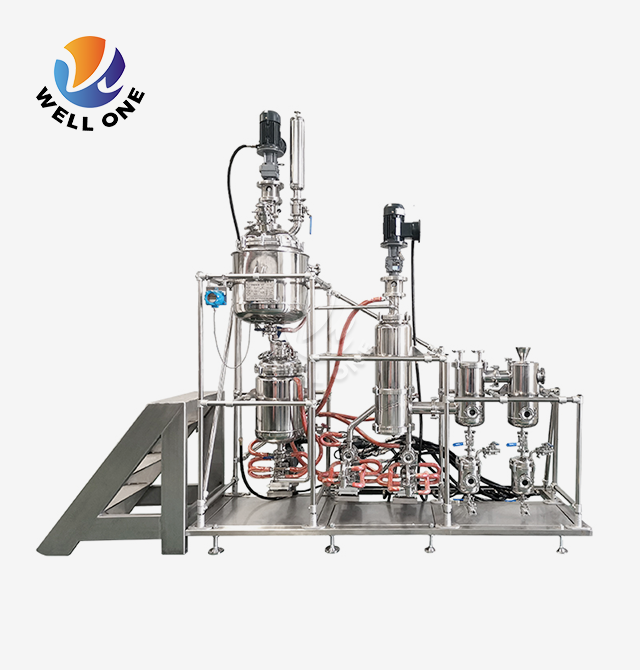
Vacuum distillation systems consist of an evaporator under vacuum, condenser, vacuum pump, and associated piping, instrumentation, and controls. The liquid feed is heated in the evaporator under reduced pressure, causing it to vaporize at a lower temperature than under ambient conditions. The vapors are cooled and condensed, yielding top-quality distillates. The non-volatile residues remain behind as bottoms product.
Vacuum distillation provides considerable advantages over conventional atmospheric distillation. Lower operating pressures result in lowered boiling points, reducing the thermal degradation of heat-sensitive feeds. The reduced temperatures also lead to energy savings. Moreover, the composition differences between components are enhanced under reduced pressures, improving separation efficiency. These benefits make vacuum distillation ideal for products requiring gentle purification.
Industries Using Vacuum Distillation Equipment
Petroleum and Petrochemical Industry
Vacuum distillation is widely used in oil refineries to distill crude oils into useful products like naphtha, kerosene, diesel, and residue. It allows gentle separation of these fractions while preventing excessive thermal cracking. Specialized vacuum pipe stills process heavy residues into vacuum gas oils and vacuum residues.
Petrochemical plants also depend on vacuum distillation. It is used to purify feeds, recover monomers, and separate isomer mixtures. Vacuum distillation produces purified petrochemical intermediates like olefins, aromatics and their derivatives.
Pharmaceutical Industry
Vacuum distillation is a critical technique in pharmaceutical manufacturing. It is used to isolate or concentrate thermally sensitive pharmaceutical ingredients like antibiotics, vitamins, enzymes, hormones, and alkaloids. Vacuum conditions prevent the degradation of these high-value compounds during purification.
This gentle purification technique helps pharma companies develop high purity ingredients that meet regulatory standards. Vacuum distillation protects the potency and efficacy of active pharmaceutical ingredients.
Food and Beverage Industry
The food and beverage industry relies on vacuum distillation to produce high-quality ingredients while protecting the delicate flavors and fragrances. It is used to concentrate aromas, extract essential oils, and produce beverage alcohols.
Vacuum conditions preserve the subtle notes and sensory characteristics of ingredients used in foods, beverages and cosmetics. This flavor-protecting benefit makes vacuum distillation the preferred choice over conventional methods.
Chemical Industry
Vacuum distillation is widely used in the manufacture and purification of various chemicals. It enables distillation of high-boiling or thermally sensitive compounds. Solvent recovery and the separation of reactant, product and impurities are also achieved via vacuum distillation in chemical plants.
Moreover, the lowered temperatures result in reduced side reactions and decomposition. Vacuum distillation improves the selectivity and yield of chemical reactions. It also reduces energy requirements compared to ambient pressure distillation.
Advantages of Vacuum Distillation Equipment
Lower temperatures: Vacuum distillation operates at temperatures significantly lower than conventional distillation, preventing thermal degradation of sensitive compounds.
Improved separations: Compositional differences between compounds are enhanced at reduced pressures, facilitating high-purity separations.
Energy efficiency: Heat requirements are lowered due to reduced boiling points and smaller temperature differences.
Safe operation: Vacuum systems allow distillation of high-boiling compounds at safely manageable temperatures.
Versatility: Vacuum conditions can be adjusted to provide optimal separation for different feed stocks.
Reduced waste: Gentle conditions preserve the value of feeds and minimize side reactions.
Emerging Trends and Innovations
Advances in vacuum technology and process automation are expanding the applications for vacuum distillation. Column internals are being optimized for higher efficiency. Remote monitoring and automated controls improve reliability.
Heat integration methods like mechanical vapor recompression reduce energy usage by recycling heat within the system. Innovative tray designs provide greater flexibility to handle wide boiling range feeds.
Continuous processing via simulated moving bed technology is being combined with vacuum distillation for non-stop pharmaceutical production. Design innovations are also facilitating modular, portable vacuum distillation systems for distributed manufacturing.
Conclusion
Vacuum distillation is a versatile separation technique that provides significant advantages over conventional distillation. It enables high-purity separations, protects sensitive compounds and improves process efficiency. Industries ranging from petroleum to pharmaceuticals rely extensively on specialized vacuum distillation equipment for critical processing needs. With ongoing innovations, vacuum distillation is poised to tackle more challenging separations across diverse applications in the future.
Xi'an Well One Chemical Technology Co., Ltd, an exclusive export agency authorized by NewSet, is a renowned Vacuum Distillation Equipment manufacturer. With 17 years of production and manufacturing experience, we ensure the best quality of our products by choosing the finest raw materials and leveraging professional equipment and our research team. Our OEM & ODM services are backed by our 3D design engineers who can provide users with 3D animation design, tailoring the appearance of the equipment to user preferences. Our product line includes experimental level, pilot level, and industrial level molecular distillation devices, as well as multi-level continuous use systems. These products have been well received by customers from various countries. If you are considering purchasing related equipment, please feel free to contact us at Mobile: (+86) 18191320360 or Email: info@welloneupe.com. We look forward to cooperating with you.
References
Górak, Andrzej, and Łukasz Olejnik. "Vacuum distillation–Current status, innovations and future directions." Separation and Purification Technology 230 (2020): 115863.
Buckingham, Stephen T., and Frederick G. Helfferich. "Vacuum
distillation." Distillation: equipment and processes. Elsevier, 2014. 297-331.
Mujtaba, Iqbal M. "Vacuum distillation and vapor-liquid separation equipment selection, sizing and troubleshooting." Handbook of Petroleum Refining Processes. McGraw-Hill Education, 2020.