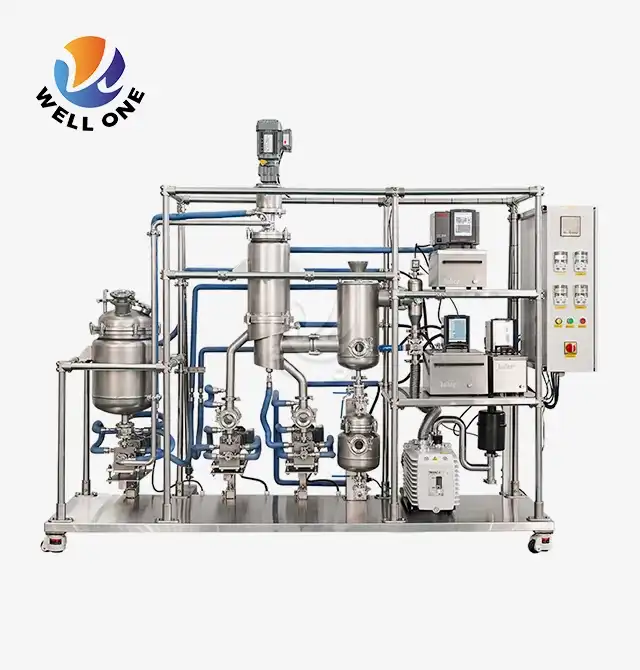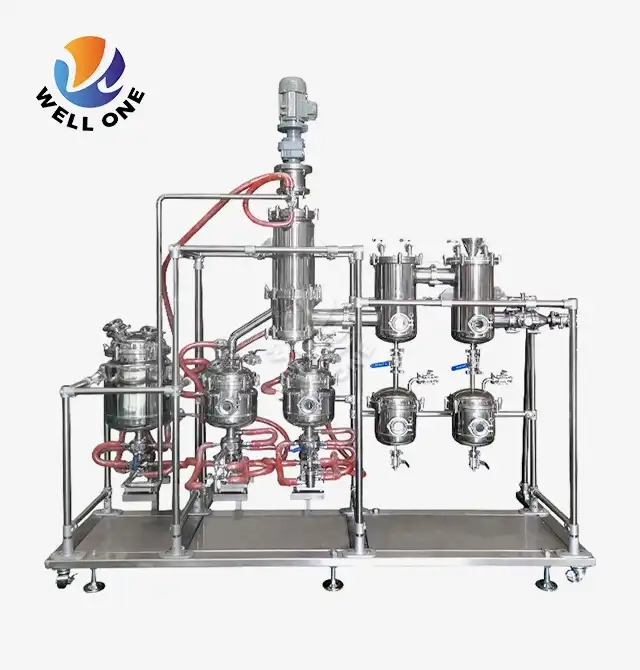




How does a laboratory thin film evaporator work?
A laboratory thin film evaporator is a sophisticated piece of equipment designed to efficiently separate and purify substances through evaporation. This innovative technology utilizes a thin film of liquid spread over a heated surface to achieve rapid vaporization, making it ideal for heat-sensitive materials. In this blog, we'll explore the intricate workings of a laboratory thin film evaporator, its key components, and the principles behind its operation. Whether you're a researcher, chemist, or industry professional, understanding this powerful tool can significantly enhance your separation and purification processes.
The Anatomy of a Laboratory Thin Film Evaporator
The Evaporator Body: Where the Magic Happens
The evaporator body is the central component of a laboratory thin film evaporator, where the actual evaporation process occurs. Typically constructed from high-quality stainless steel or glass, the body is designed to withstand high temperatures and corrosive environments. It is often equipped with a jacket, which allows for precise temperature control by circulating heating or cooling fluids. This controlled temperature environment ensures uniform heating of the liquid film, promoting efficient evaporation and consistent results. The design of the evaporator body is critical to the overall performance and effectiveness of the system.
The Rotor: Creating the Thin Film
The rotor inside the evaporator body is essential for creating the thin film that facilitates evaporation. Comprising a central shaft with attached wiper blades or other spreading mechanisms, the rotor spins at high speeds to evenly distribute the liquid feed across the heated surface. The blades maintain a precise gap from the evaporator wall, ensuring the formation of an ultra-thin liquid film, typically between 0.1 and 0.5 mm. This thin film maximizes surface area exposure to heat, enhancing the efficiency of evaporation and making it ideal for heat-sensitive materials and high-precision processes.
Feed and Discharge Systems: Controlling the Flow
The feed and discharge systems play vital roles in regulating the flow of liquid through the evaporator. The feed system introduces the liquid mixture, usually at the top of the evaporator, where the rotor immediately spreads it into a thin film. As the liquid travels downward along the heated wall, volatile components evaporate, rising to be collected separately. The remaining concentrated residue exits at the bottom through the discharge system. Both systems are precisely controlled to maintain the optimal flow rates and ensure efficient separation of components during the evaporation process.
The Science Behind Thin Film Evaporation
Heat Transfer: The Driving Force
Efficient heat transfer is critical for the performance of a laboratory thin film evaporator. The rotor generates a thin, uniform liquid film that greatly increases the surface area exposed to heat, facilitating rapid and efficient thermal energy transfer. This heat transfer is especially important for heat-sensitive substances, as it ensures minimal exposure to high temperatures, thereby preventing degradation or decomposition of sensitive compounds. The thin film's large surface area allows for more effective heat application, ensuring the process is both quick and gentle, preserving the quality of the materials.
Mass Transfer: Separating the Components
In a thin film evaporator, mass transfer is essential for the efficient separation of components. As the thin film is heated, the volatile components of the liquid rapidly vaporize, leaving behind the less volatile residue. The large surface area of the film accelerates the mass transfer process, allowing for a quicker separation. Additionally, by maintaining a reduced pressure inside the evaporator, the boiling points of the components are lowered, further promoting the evaporation of more volatile substances. This efficient mass transfer ensures high purity and optimal separation of the desired products.
Fluid Dynamics: Ensuring Uniform Processing
The fluid dynamics inside a thin film evaporator are influenced by the rotor's rotating action, which generates turbulence in the liquid film. This turbulent flow ensures that the liquid is evenly distributed across the heated surface, preventing any areas of stagnation. The wiper blades' motion helps to keep the liquid in constant motion, optimizing heat and mass transfer. This dynamic mixing allows for uniform processing of the entire sample, ensuring consistent evaporation and separation of components. It also improves efficiency by ensuring that all liquid portions are subject to the same thermal conditions.
Applications and Advantages of Laboratory Thin Film Evaporators
Versatility in Research and Development
Laboratory thin film evaporators offer exceptional versatility, making them valuable across various research and industrial sectors. In pharmaceutical research, these evaporators are crucial for purifying active ingredients and concentrating delicate compounds without causing degradation. In the food industry, they are employed to extract and concentrate flavors, vitamins, and nutrients, ensuring minimal loss of volatile components. Similarly, the chemical industry uses thin film evaporators for purifying specialty chemicals, recovering solvents, and optimizing reaction products. Their adaptability makes them an indispensable tool in diverse R&D applications, facilitating innovation and quality control.
Gentle Processing of Heat-Sensitive Materials
One of the standout features of laboratory thin film evaporators is their ability to process heat-sensitive materials with minimal thermal degradation. The combination of short residence times and efficient heat transfer ensures that heat-sensitive compounds, like vitamins, enzymes, and pharmaceuticals, are exposed to heat for the shortest time possible. This gentle processing reduces the risk of molecular breakdown, preserving the integrity of the product. The evaporator's design also ensures uniform heating, preventing localized overheating, which is particularly crucial when working with compounds that can easily degrade or lose efficacy at elevated temperatures.
Scalability and Process Optimization
Thin film evaporators are invaluable tools for process optimization, offering significant benefits for scaling up from laboratory to industrial-scale operations. Their small, controlled environment allows researchers to test and refine various parameters such as temperature, pressure, and residence time before moving to larger production systems. This ability to conduct detailed experiments at a small scale helps identify the most efficient conditions, improving both performance and product quality. As a result, researchers can gain insights that enable smoother and more cost-effective transitions to larger-scale production, saving time, money, and resources in the long run.
Conclusion
Laboratory thin film evaporators represent a pinnacle of separation technology, offering unparalleled efficiency and gentleness in processing. By understanding their working principles, researchers and industry professionals can harness the full potential of these remarkable devices, pushing the boundaries of what's possible in separation and purification processes. If you want to get more information about this product, you can contact us at info@welloneupe.com.
References
1. Smith, J. (2022). Principles of Thin Film Evaporation in Laboratory Settings. Journal of Separation Science, 45(3), 567-582.
2. Chen, L., & Wang, Y. (2021). Advancements in Laboratory Thin Film Evaporator Design. Chemical Engineering Progress, 117(8), 34-42.
3. Rodriguez, A. et al. (2023). Applications of Thin Film Evaporators in Pharmaceutical Research. Drug Discovery Today, 28(5), 1023-1035.
4. Zhang, X. (2020). Fluid Dynamics in Rotating Thin Film Evaporators. AIChE Journal, 66(11), e16284.
5. Patel, R., & Johnson, K. (2022). Heat Transfer Mechanisms in Laboratory-Scale Evaporators. International Journal of Heat and Mass Transfer, 185, 122359.
6. Lee, S. et al. (2021). Optimization of Thin Film Evaporation Processes for Heat-Sensitive Materials. Separation and Purification Technology, 276, 119358.